




Like many women with Turner syndrome (TS), I went my whole life with the reality that I most likely would never be able to have my own kids, a diagnosis confirmed with recent testing. Even though I had the understanding, it still hit harder than I could have ever imagined when it was confirmed. While I understand the fear that infertility could drive away future partners, I also believe in all the different ways we can build our own families, such as surrogacy, adoption, and family planning. It also brings me hope to know that I am not alone on my journey.
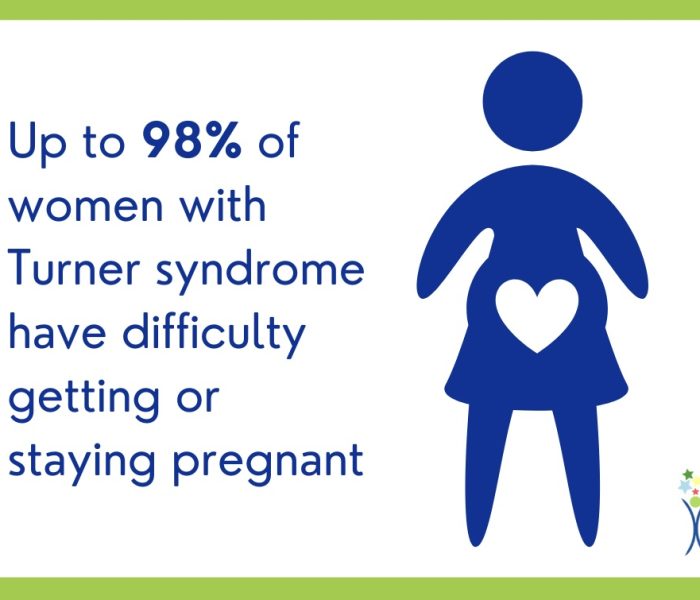
Just like myself, many women dream of one day starting a family with someone they love. However, this proves difficult for many women living with TS. Many women living with TS experience infertility, which can lead to anxiety surrounding conversations about infertility and fear that partners may not be understanding. This causes women with TS to be closed off and reluctant to have romantic relationships. Based on previous studies, it has been found that “In opposite sex relationships, infertility status was found to arouse fear of ending up alone and anxiety over engaging in romantic relationships.” (Clauson & Martin & Watt, 2012, pg. 1) Conversations surrounding infertility can be difficult and may lead to disappointment in partners. Rather than having these difficult conversations, women with TS choose to believe it is easier to not engage in romantic relationships at all. After interviewing an informant, she had shared that “I am more nervous because of the fertility side of it. If you were in a serious relationship you would need to explain that at some point and that would be quite hard”, proving how infertility can be anxiety provoking in serious relationships. (Clauson & Martin & Watt, 2012, pg. 9)
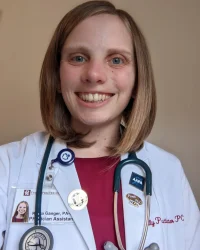
However, this does not have to be the case. There are other outlets women with TS can take to start families with loved ones. For example, IVF and surrogacy are options for people who struggle with infertility and dream of having a family. Not only that, but in some cases for women with TS, it is possible to have kids naturally. This was the case of Kayla Ganger, who was able to have kids on her own with the support of doctors and her husband.
Kayla’s Journey
Her journey started like many other women with TS. Growing up, she had come to terms with the fact that infertility might be in her future, but she still had dreams of being a mom. When Kayla and her husband were ready to start a family, they started researching and meeting with medical professionals, where she was then referred to a reproductive endocrinologist. The reproductive endocrinologist offered her an AMH test, also known as an anti-müllerian hormone test. This tests the hormone that the brain sends to the ovaries to make eggs. As shared with us by Kayla, her “result came back as “undetectable”—indicating that I had no eggs left, and he suspected I would go into early menopause. He shared that in his entire career he had only seen about 5 women achieve pregnancy with that level. This supported the suspicion that pregnancy would not be possible”. Despite this news, Kayla and her husband still made the effort to try and have kids naturally. During this time, questions began to arise, questions like ‘When should we just give up? Had we waited too long? Should we have done something different?’, and frustration began to set in.
Kayla and her husband had started looking at other options, and began the process to become foster parents. It was important to them to give a child the life they deserved. They were in the final month of the process of becoming foster parents when they found out Kayla had become pregnant!
During her pregnancy, she was closely monitored by a Maternal Fetal medicine specialist, endocrinologist, and cardiologist. Kayla received routine blood work and echocardiograms to make sure she and the baby were healthy. This is necessary due to high risk pregnancies in women with TS. Needless to say, she and her husband were so excited for their miracle.
There is hope
While Kayla’s story defies odds for most women with TS, we can also learn from Kayla that women should not feel shame to have conversations with partners. There are other ways to have a family using alternative methods that can also lead to beautiful families. By continuing to fight the stigma around infertility, the burden will not lay so heavily on women with TS, decreasing social anxiety in women with TS. Infertility does not need to be driven by anxiety, it is not who you are, but only a part of your story. Being someone who has TS, I am inspired by Kayla’s story, and now know there should not be shame around my experience with infertility. Stories like hers are only the tip of the iceberg to break the stigma.
Sources
Anxiety as a cause of attachment avoidance in women with Turner Syndrome, Taylor & Francis Online
Fertility Preservation in Females with Turner Syndrome: A Comprehensive Review and Practical Guidelines, National Library of Medicine
Written by Calla Norton, TSF Volunteer Blog researcher/writer. Edited by Kayla Ganger, Professional Member Liaison, TS Women in Medicine. Designed by Delvis Rodriguez, Data Management.
© Turner Syndrome Foundation, 2025



Hi, My name is Diane, and, at about age 16, I was diagnosed with TS. As I am now much older and retired. At the time I received my diagnosis (the early 1960s), DNA testing was still somewhat experimental and just becoming available as an option. Of course, it was not covered by insurance. Fortunately, my parents were able to pay for the test, and I received a proper diagnosis. When we went to my follow-up appointment with the endocrinologist to obtain the results; he beat around the bush a bit. Being an assertive individual, even at that age, I pressed him to disclose the details of my condition and future outlook. After stammering a bit, he finally revealed that I could not have children. His initial behavior and body language suggested that he was about to give me a death sentence. However, I am not ashamed to admit that it was one of the happiest days of my life. Frankly, I was doing headstands as we left his office. I know that many young women who have been diagnosed with TS and received similar news will find my reaction strange and difficult to understand. As an older woman, I would like to let any young women in this situation know that they can experience a full life; whether or not that includes biological children. All the best, Diane
You’re amazing, Kayla!
My name is Alexis. I have TS and I am four foot seven inches tall. I had a natural pregnancy (without the assistance of fertility doctors/treatment) at 33 years old. My husband and I are so lucky to have a beautiful, healthy daughter. I was also told that I had no chance of a natural pregnancy by a fertility doctor (eight months before becoming pregnant).