



A Diagnosis That Changed Everything
During my pregnancy, I was considered high risk. My amniotic fluid levels were low, and my baby was measuring smaller than expected. The doctors suspected she might be born with a form of dwarfism. I was overwhelmed with fear, uncertainty, and a fierce desire to protect the tiny life inside me.
When it was time to deliver, my labor had to be induced—and although it was fast, it was one of the most traumatic experiences of my life. The contractions were so intense that I would pass out and come to with each wave of pain. Still, I held on to hope. I had chosen not to know the sex of my baby and had long imagined the joy of hearing the words, “It’s a girl!” or “It’s a boy!”
Instead, the room fell silent.
The doctor said, “It’s a…” and hesitated. That pause is something I will never forget.
My baby was born with ambiguous genitalia, and the medical team struggled to understand what they were seeing. Later, genetic testing revealed she had Turner syndrome with XO chromosome mosaicism. But at the time, there was very little information presented with clarity. I was even told that one day she could decide if she wanted to identify as male or female, which added its own emotional and psychological weight.
It was only later—after years of learning, advocating, and receiving proper medical guidance—that we finally understood the truth:
Turner syndrome only occurs in females and affects approximately 1 in every 2,000 live female births.
In those early days, what I lacked in information, I compensated for in love. As I held my daughter, I knew one thing for certain: she was fearfully and wonderfully made, and I would stand by her through every challenge.
The Early Days: Surgery, Specialists, and Survival
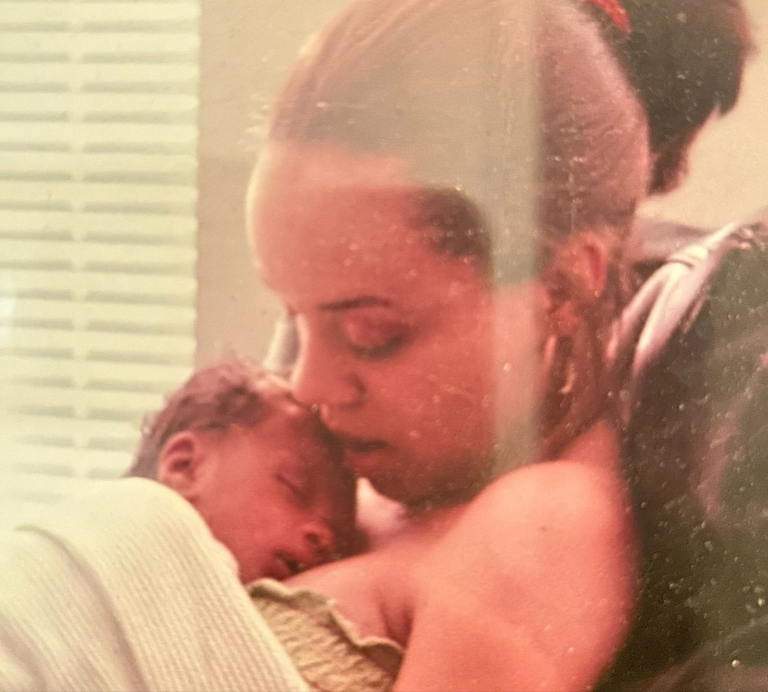
At just five months old, my daughter needed surgery to remove undeveloped, herniated gonads that carried a high risk of becoming cancerous. It was terrifying to hand over such a tiny baby for such a big procedure, but I knew it was necessary to protect her life.
From that point forward, our world filled with specialists:
- Cardiologist – to monitor for heart murmur
- Endocrinologist – to manage growth hormone and hormone therapy
- Urologist – to support her development after early surgery
- Psychologist & Behavioral Specialist – to help with hyperactivity and emotional regulation
Our medical binder was thick, color-coded, and constantly growing. Every appointment became part of our normal. Every new doctor became another voice guiding us through the unknown.
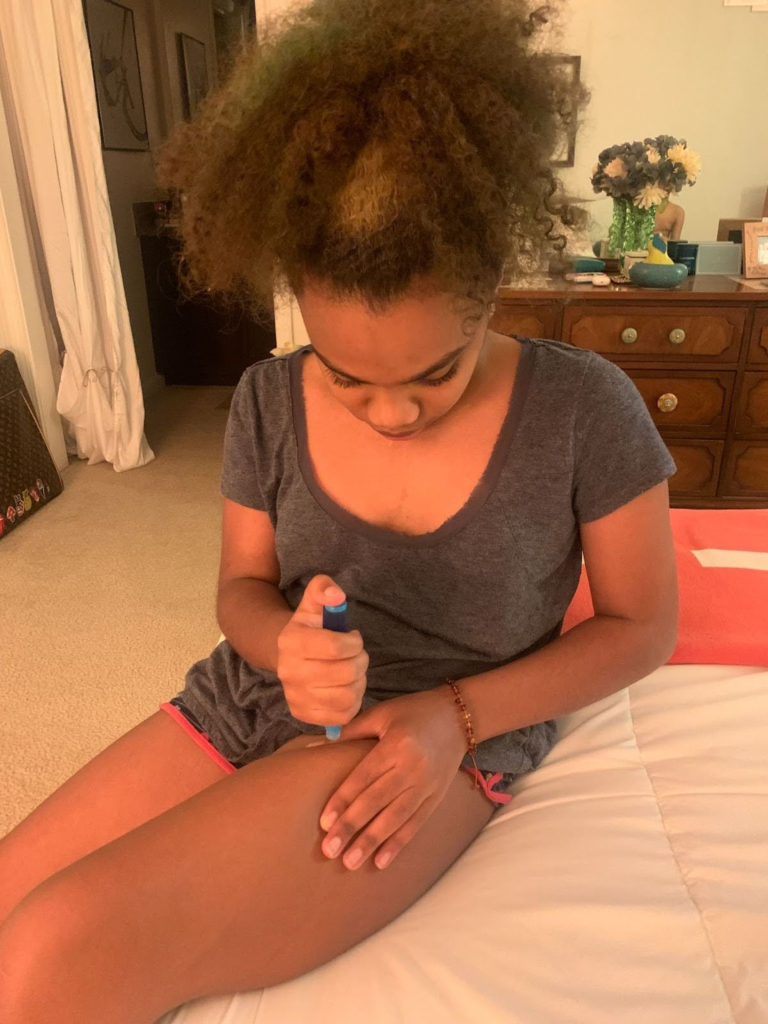
She began growth hormone therapy at two years old. This chapter of our journey was incredibly hard. Every single night required an injection, and more often than not, we had to hold her down while she screamed and cried. It was traumatic for her — and traumatic for us. I often cried afterward too, feeling the weight of choosing a necessary pain for her long-term benefit.
But then came the day she reached 4’9” — a milestone that, for many families, might seem ordinary. But for us, it was a moment of indescribable relief, gratitude, and victory.
We had fought for every inch, every centimeter, every millimeter of her growth.
That height was more than a number.
It was a triumph.
School, Struggles, and Strength
Ezelle’s preschool years revealed early challenges. She was extremely hyperactive, struggled to sit still, and her emotions were often big and intense. Yet beneath that energy was a mind full of creativity and curiosity.
Elementary school brought learning difficulties—especially in math and spatial reasoning. Some days were harder than others. Some days I questioned whether I was doing enough. But then moments of brilliance would shine through.
Like the time, at just four years old, she read an entire Franklin book on her own.
Her imagination has always been her superpower. Her creative mind allowed her to dream beyond her diagnosis, even when her body struggled to keep up.
Socially, Ezelle has always preferred solitude. She never showed much desire for friendships or community, often choosing to stay to herself. While she wasn’t outwardly distressed by social disconnection, it became clear over time that she struggled to read social cues. She didn’t quite realize when physical touch made others uncomfortable or when certain interactions were considered awkward. This lack of affect wasn’t indifference—it was simply how she processed the world around her.
Even now, we’re still learning how to guide her in navigating social norms while honoring the way God uniquely wired her. Her sensitivity, while sometimes misunderstood, is still one of her most beautiful qualities.
From Video Games to Visual Storytelling
As she grew, Ezelle found a love for video games. She didn’t just want to play them—she wanted to design them. She would sketch characters, imagine storylines, and talk for hours about the worlds she wanted to create.
That spark never left her.
Today, having graduated high school last May—a milestone that brought an immense sense of relief—Ezelle is taking a gap year to work and gain real-life experience before beginning college in the fall, where she plans to pursue animation.
The dream has matured, but the foundation remains the same: storytelling, creativity, and imagination. Watching her step confidently into this season, on her own timeline, has been one of the greatest joys of my life.
Navigating the Unknown With Little Support
In the beginning, I didn’t have a strong relationship with God the way I do now. I didn’t have a guidebook. I didn’t have a support network. Much of our journey was trial, error, prayer, tears, and determination.
If there’s one thing I wish I had back then, it’s connection—a community of parents who understood Turner syndrome, resources that were clear and accessible, and reassurance that I wasn’t failing just because the journey was hard.
That’s why I write this now:
To help another mother feel seen.
To help another family feel informed.
To help another parent feel less alone.
What I Want Other Parents to Know

To any parent reading this, especially those early in the journey, I want you to hear this clearly:
- You are not alone.
- You are doing better than you think.
- Your child is not defined by a diagnosis.
- It’s okay to be scared and strong at the same time.
- Your child’s path may look different, but it will still be beautiful.
Be proud of your child—and proud of yourself.
And to My Daughter, Ezelle

Your wings were there from the beginning.
I’m just grateful I got to help you unfold them.
Written by Jean-Marie Andrews , designed by Gerely Caba.
© Turner Syndrome Foundation, 2026