Parents
You are your child’s first and primary advocate and teacher. While that may be daunting, this is an exciting time for you and your child to take the next steps in their journey.
- Accommodations: If your child needs disability accommodations, ensure the paperwork is completed and sent to the appropriate school administrator before the start of the year. If you are unsure who to talk to, you can always ask your child’s teacher from the current or previous school year. The school secretary often knows as well!
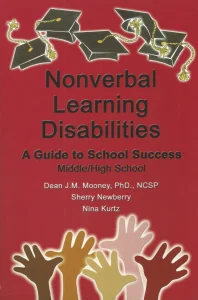
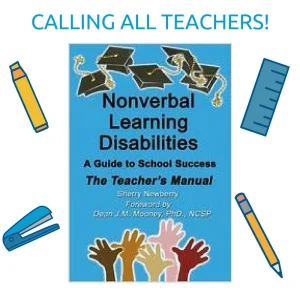
Nonverbal Learning Disability (NVLD) is prevalent among students with TS. To help both parents and teachers bridge the gap for their child with NVLD, TSF has curated NVLD learning pamphlets to educate on necessary accommodations.
Order your copy today to have it ready to distribute to your child’s teachers and school counselors.
- Health Checks: Completing any health checks the school system requires is an essential part of returning to school. This can include specific medical appointments for routine physicals, neuropsychological testing, and hearing or vision screenings. Ensure your child’s necessary vaccinations and documentation are completed prior to the first day of school (What school psychologists need to know about students with Turner syndrome, 2024).
- Communicating Health: Communication is key when sending your child to school with health concerns. It’s important to know what you should communicate and how to do so. Some schools may ask you to fill out a form to communicate diagnoses or recommended accommodations, which would be handed in digitally, via email, or by hand in person. Make sure to ask your school about the appropriate process.
If you have questions or want to discuss your child, you can set up a communication plan with your child’s network. For example, some teachers may prefer to call you to give you an update. School psychologists and counselors may privately meet with you to explain the legalities they can discuss (Jacob & Powers, 2009). Whatever it may be, it’s essential to reach out to your child’s educators to have a plan set in place for the year.
- Advocating: Advocating for your child can also be worrisome. We have a webinar that discusses the rights of students with TS to help parents understand how to advocate for their child at school (Webinar recording- rights of students with Turner Syndrome in a school setting, 2024).
Look through it to be prepared if the situation arises for you and your child.
- Transitioning Schools: When your child transitions from one school to another, it’s essential to craft a team to help the student transfer their accommodations (Lilienstein et al., 2006). This team will likely stem from your child’s current school or IEP/ 504 committee, including any other individuals needed for the transition. This group aims to ensure that your child’s needs are being addressed in the new school setting and that communication is established with the new school psychologists/counselors.
Students
Returning to school can be scary, but there are ways to prepare!
- Disabilities: If you have a diagnosed learning disability, you already have an IEP (Individualized Education Plan) or 504! An IEP or 504 plan will outline the specific accommodations that can help you.
Notably, accommodations can have a certain stigma attached to them in some environments. But they are resources to help you learn better and thrive. If you feel that you’re being judged for needing accommodations, remind yourself that these accommodations are for YOU and no one else.
If they help you, that matters because you must look out for yourself before anyone else. And if you’re unsure how or why they might help you, don’t hesitate to ask your school counselor or teacher if it would be a good option. Advocating for yourself in asking for resources and help when needed makes you stronger, not weaker. So, never be embarrassed or afraid to ask.
- Socializing: Participating in group clubs or programs can help you thrive socially or emotionally. Although difficult, putting yourself out there can help you gradually develop and hone social skills (Alcared-Guerrero et al., 2023). Social anxiety is a huge struggle, especially for those with TS, and practicing collaboration with others can help alleviate some of the pressure that comes with socializing and making friends.
An excellent way to find a group you can tag with is to join a school club for an enjoyable hobby (you already have a conversation starter in your passion for the hobby!) Learn more about ways to counter social anxiety here!
If you feel like you don’t belong in a certain group of people, don’t be discouraged. There are so many people out there!! Making friends is trial-and-error, and you have to keep looking until you find the person you enjoy spending time with and who supports you.
Teachers
One of the reasons we praise teachers so highly at TSF is their ability to prepare for any student who walks through the door. This year is no different, and we have a couple of tips for you!
- Resources: Before the year, check if any of your students have documented disabilities so you can tend to their accommodations and make a positive first impression.
However, make sure to keep an eye out for students who don’t have any documented accommodations. You may notice they could benefit from additional resources. Start a conversation with your student to understand their difficulties. Then, ask your school counselor or psychologist to see if any accommodations can help the student learn better (School Accommodations, 2024).
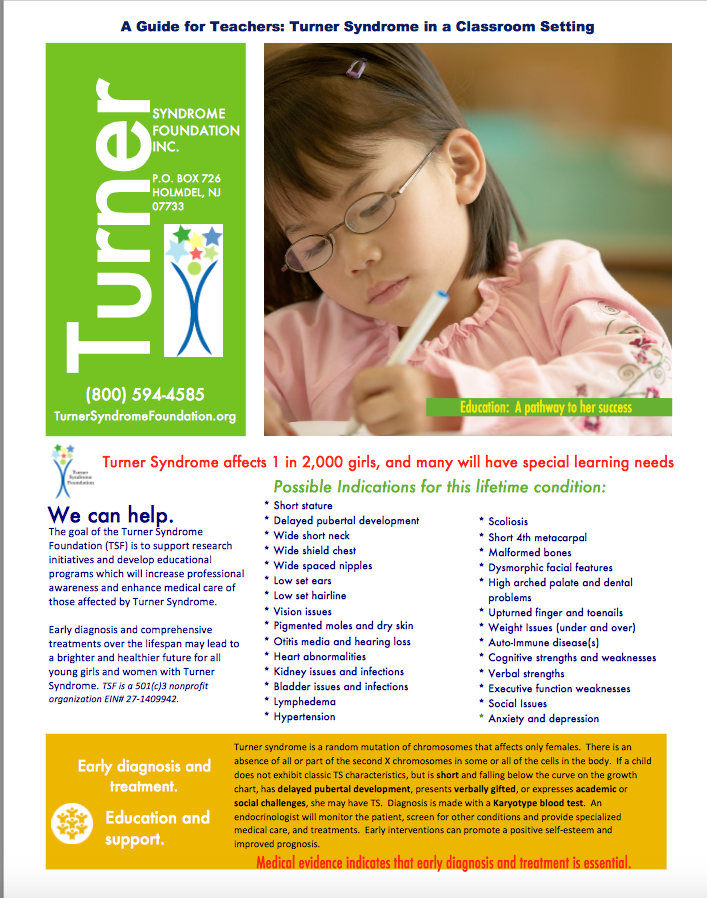
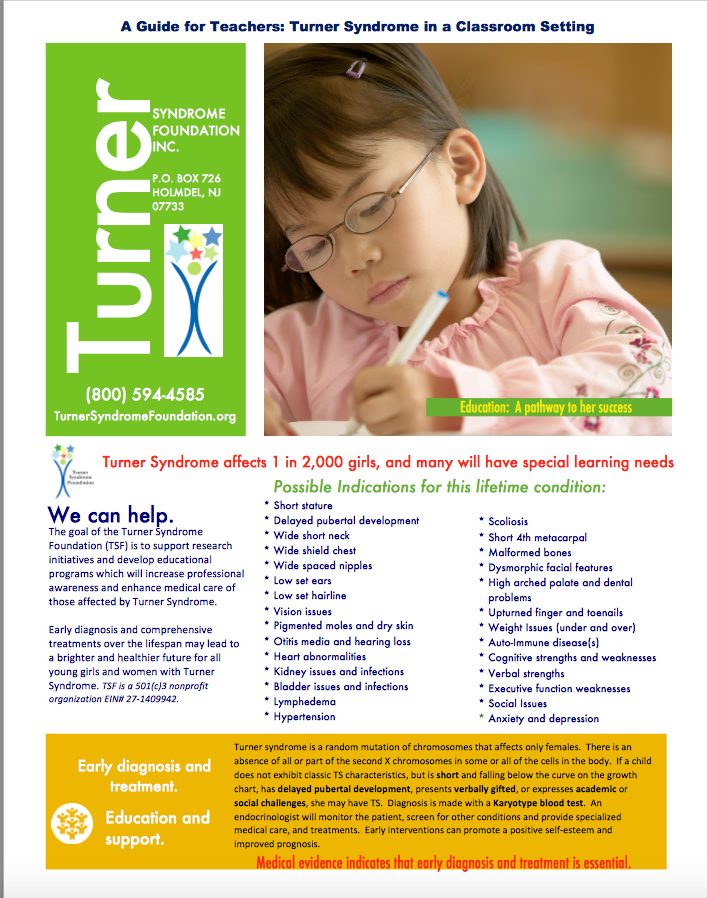
We strongly recommend that you order a copy of our Teacher’s Guide and NVLD Teacher’s Manual. The tips and skills we provide help create an optimal learning environment for many students, regardless of whether they have TS.
- Social Environment: Creating a positive social environment for your students is vital. In a study, researchers at Ohio State University identified that “being the only student, or one of a few, of a particular identity group can lead students to feel detached, apathetic, or reluctant to participate” (The Ohio State University, n.d.).
This feeling of isolation can exist among any student who feels that they stick out in some way, such as those with TS who need accommodations. To combat this, it’s important to make your curriculum caters to multiple personalities. For instance, the research study recommends having assignment options to allow students to express their comprehension comfortably in more modalities.
Another consideration is to ensure your material is accessible. If a student has an impairment (ie. cognitive, auditory, motor, etc.), they will feel more comfortable and seen in your classroom being offered accommodations without having to ask for it themselves in fear of being judged.
Finally, if you notice bullying or hurtful comments in class, the same researchers by the Ohio State University advise you to “call in” the comments directly. They explain that by using “I” statements, the teacher directs the attention away from one individual student. Additionally, allowing students to discuss feelings openly and explain why a statement may be hurtful can teach open communication and, once again, avoid targeting one individual.
Keep in mind, you know your classroom best! These tips are intended to spread awareness and inspire ideas.

Good Luck This Year – TSF Has Your Back!
Your Donation Helps Us to Provide Free Content Like This.
Every Dollar Counts!
References:
Jacob, S., & Powers, K. E. (2009). Privileged communication in the school psychologist–client relationship. Psychology in the Schools, 46(4), 307-318.
Lillenstein, D. J., Levinson, E. M., Sylvester, C. A., & Brady, E. E. (2006). School Psychologist Involvement in Transition Planning: A Comparison of Attitudes and Perceptions of School Psychologists and Transition Coordinators. Journal for Vocational Special Needs Education, 29(1), 4-16.
The Ohio State University. (n.d.). Addressing Offensive Comments in Class. Teaching and Learning Resource Center. Retrieved September 7, 2024, from https://teaching.resources.osu.edu/examples/addressing-offensive-comments-class
The Ohio State University. (n.d.). Shaping a Positive Learning Environment. Teaching and Learning Resource Center. Retrieved September 7, 2024, from https://teaching.resources.osu.edu/teaching-topics/shaping-positive-learning
Written and Researched by Helen Rhoads, Academic Adviser and TSF Volunteer Blog Writer. Edited and Designed by Riya Ajmera, TSF Blog Coordinator. Cover Photo by Riya Ajmera.
© Turner Syndrome Foundation, 2024


Thank You FOr SHaring These Information also Click in Below Website To Get More Content Best IGCSE School in Hyderabad offering world-class learning, expert faculty, and holistic development at Indus Valley International School near LB Nagar.
https://indusvalleyinternationalschool.com/blog/