



Personal Acknowledgement
My name is Calla Norton, and as a woman with Turner Syndrome (TS), even the slightest chest pain makes me alarmed for Aortic Dissection, and maybe you feel the same way too.
With February being American Heart Month, the goal of this article is to raise awareness for the signs and the measures you can take to catch and prevent Aortic Dissection.
Information presented in this article is based on the webinar “Aortic Dissection in Turner Syndrome” presented by Dr. Siddharth Prakash for the Turner Syndrome Foundation.
What is Aortic Dissection?
Aortic dissection occurs when there is a tear in the inner lining of the aorta.
Aortic dissection in Turner syndrome is rare, but the risk is over 100 times higher than that of the general female population. Aortic dissection is a potentially life threatening condition and requires immediate intervention, so every individual with TS should be aware of the condition and take the recommended steps for monitoring.
According to Dr Prakash, “Fortunately, we can control or correct many of the risk factors. If these are being monitored, we know that the risk is lower, and we can use medications to reduce your risk of dissection. That is the reason why we recommend medications for life.”
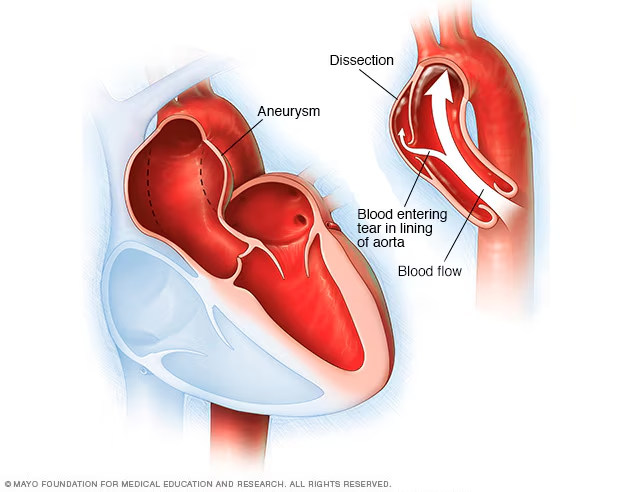
Signs and Symptoms of aortic dissection
Symptoms to watch for include:
- Severe chest and back pain
- Fainting
- Leg pain
- Difficulty breathing
- Any symptoms that may appear like a stroke.
If any of these symptoms occur, please see a doctor and advocate for yourself. A doctor may dismiss these symptoms if they are not knowledgeable in TS, as aortic dissection is not common in young women without TS.
You can advocate for yourself by telling the doctor about your TS diagnosis and making sure they are aware you are at higher risk for aortic dissection.
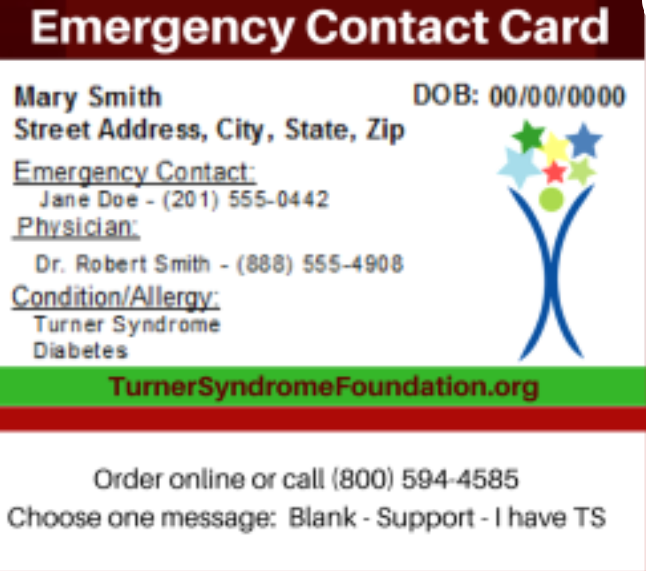
A helpful resource to communicate the urgency of aortic dissection in TS is our Emergency Alert Card, available to purchase for just $10.
This card is customized with your information and can be kept in your wallet to present to emergency responders or in the emergency room so they are aware of the proper steps to take.
Aortic Dissection Risk Factors
There are several risk factors that can increase the likelihood of aortic dissection.
The first risk factor is high blood pressure. In women with TS, it can be helpful to have a systolic blood pressure of 120. If you have high blood pressure, taking a beta blocker can help prevent aortic dissection. Beta blockers help by slowing down the nervous system and can lower the stress on your heart and aorta. Consult your cardiologist if you have high blood pressure.
Other risk factors include a bicuspid aortic valve, coarctation of the aorta, or significant aneurysm. If any of these in combination with high blood pressure, they can can compound and make the risk higher, so be sure to consult with your cardiologist.
Preventative Measures
There are a few measures women with TS can take to lower their risk of aortic dissection. These include eating healthy, regular exercise, and getting enough sleep to manage blood pressure.
Another way to stay on top of your heart health is to get imaging such as echocardiograms, MRI’s, and CT scans in accordance with the Clinical Care Guidelines. Do research to make sure the facility is trained in getting good imaging of the aorta, as imaging the aorta can be very difficult.
If you feel any symptoms of aortic dissection, please visit the nearest emergency room. Aortic dissection is a medical emergency that will require surgical intervention and extensive recovery.
Advocate for yourself and DO NOT allow the emergency room to send you home until the possibility of aortic dissection has been ruled out. When concerned, a CT Scan is highly recommended.
Learn More
References
“Aortic Dissection.” Mayo Clinic, Mayo Foundation for Medical Education and Research, www.mayoclinic.org/diseases-conditions/aortic-dissection/symptoms-causes/syc-20369496. Accessed 24 Jan. 2026.
Written by Calla Norton, TSF Volunteer Blog Writer.
