





Imagine the frustration of constantly asking people to repeat themselves because the world around you is becoming increasingly muffled. For many individuals with Turner syndrome (TS), this is a reality they face due to progressive hearing loss.
Hearing loss can significantly impact quality of life including school performance, work productivity, and social interactions. This post will cover how hearing loss occurs in Turner syndrome and provide resources to help manage it.
Structural Abnormalities: Individuals with Turner syndrome often have differences in the shape of their skull and throat (Alves & Oliveira, 2014). These structural changes can affect middle ear ventilation, making it easier for bacteria from the nose and throat to enter the middle ear (Alves & Oliveira, 2014). This puts individuals with TS at a higher risk for chronic ear infections, known as Otitis media. Chronic ear infections can cause damage to the middle ear, resulting in conductive hearing loss.
Inner Ear Issues: As children with Turner syndrome grow older, they can develop a type of hearing loss called sensorineural hearing loss. This occurs when there is damage to the cells or nerve fibers in the inner ear, or damage to the auditory nerve that carries signals to the brain (Mount Sinai Health System, n.d.). According to a study by Alves & Oliveira (2014), sensorineural hearing loss can progress gradually and will worsen over time. Additionally, while this type of hearing loss can occur during childhood, the risk increases with age.
Hearing loss due to frequent ear infections is found in 30% of children with Turner syndrome who are under the age of ten-years-old (Alves & Oliveira, 2014). The plus side is that as these children with TS get older, middle ear infections tend to decrease. Kavoussi et al. (2006) reported that sensorineural hearing loss is extremely common in individuals with Turner syndrome, affecting up to 90% of adults.
Audiologist visits: Bondy (2007) suggests individuals to have their hearing checked by a hearing specialist, known as an audiologist, as soon as they are diagnosed with Turner syndrome. Those with TS that have a history of ear infections or hearing loss should have their hearing evaluated once a year (or as recommended by their hearing specialist). Yet, those with Turner syndrome without a hearing loss history should still have check-ins with a hearing specialist every 2-3 years.
ENT visits: It is recommended that individuals with Turner syndrome that experience frequent middle ear infections (called acute otitis media) are referred to an ear, nose, and throat specialist, known as ENT/otolaryngology. The close monitoring of an ENT specialist is essential since hearing loss from frequent ear infections can have a large impact on speech and language development (Bondy, 2007).
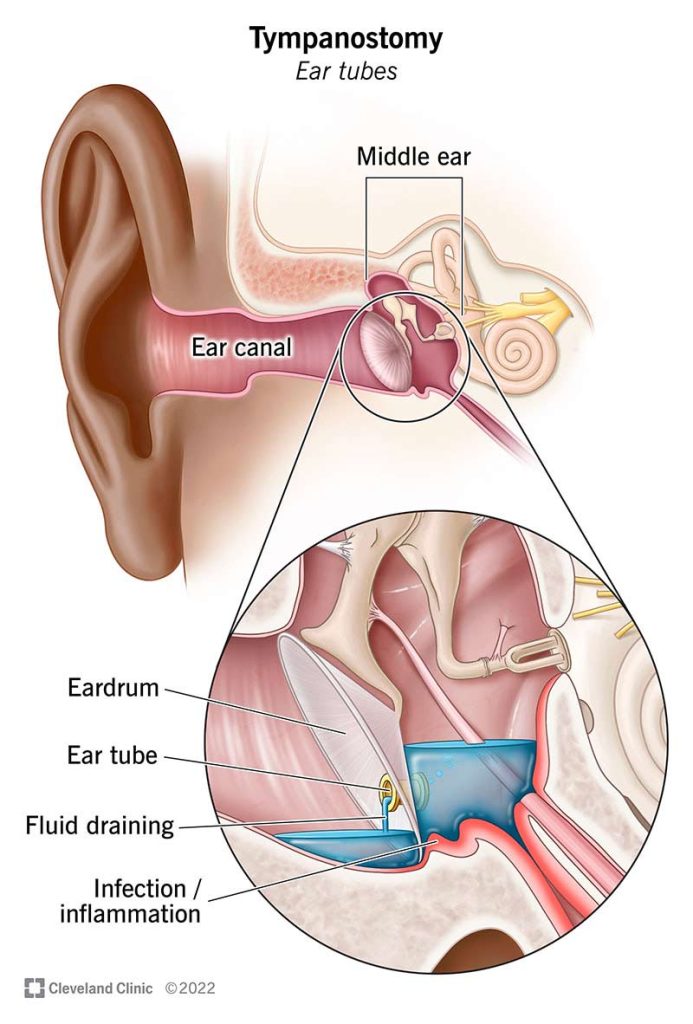
Tympanostomy tube placement: One treatment that the specialist may recommend is inserting small tubes into the eardrums to help drain fluid from the ears – a procedure called Tympanostomy tube placement. The ENT doctor may also suggest removing the tonsils and/or the adenoids.
Hearing aids: For mild to moderate hearing loss, hearing aids enhance the volume of sounds to make it easier for the ear to pick up. Hearing aids are noninvasive and work by simply making sounds louder (Handzel, 2024).
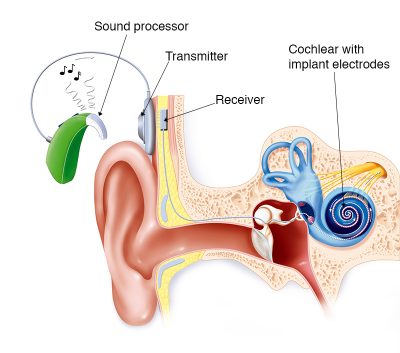
Cochlear implants: In cases of severe sensorineural hearing loss, hearing aids are not effective and cochlear implants may be considered instead. These devices are surgically inserted and function by bypassing damaged parts of the ear to directly stimulate the auditory nerve (Handzel, 2024).
Assistive listening devices: Devices such as FM systems or loop systems can enhance sounds in challenging listening environments, like classrooms or auditoriums (U.S. Department of Health and Human Services). The telecoil in hearing aids and cochlear implants picks up signals from FM or loop systems and transmits it to your device. If you don’t have a telecoil-equipped device, loop receivers with headsets can provide similar benefits.
Captioned telephones: Captioned telephones provide real-time captions of conversations, helping individuals with hearing loss during phone calls (U.S. Department of Health and Human Services).
Relay Conference Captioning (RCC): A free service that delivers live text captions for video conference calls. More information is available here.
Computer-aided transcription service (CART): A service that provides someone trained in the technology to instantly translate conversations in “conventions, government and business meetings, various trainings, entertainment, and educational settings” (CART, n.d.).
Educational support: Preferential seating in classrooms and access to educational materials in alternate formats can also benefit those with hearing impairments or individuals with TS.
Addressing the connection between Turner syndrome and hearing loss is essential. We at TSF are constantly working to ensure that every individual is able to advocate for their needs.
Along with regular visits to your audiologist and ENT and looking into hearing technology that can help, we want to make sure you know the resources available to you.
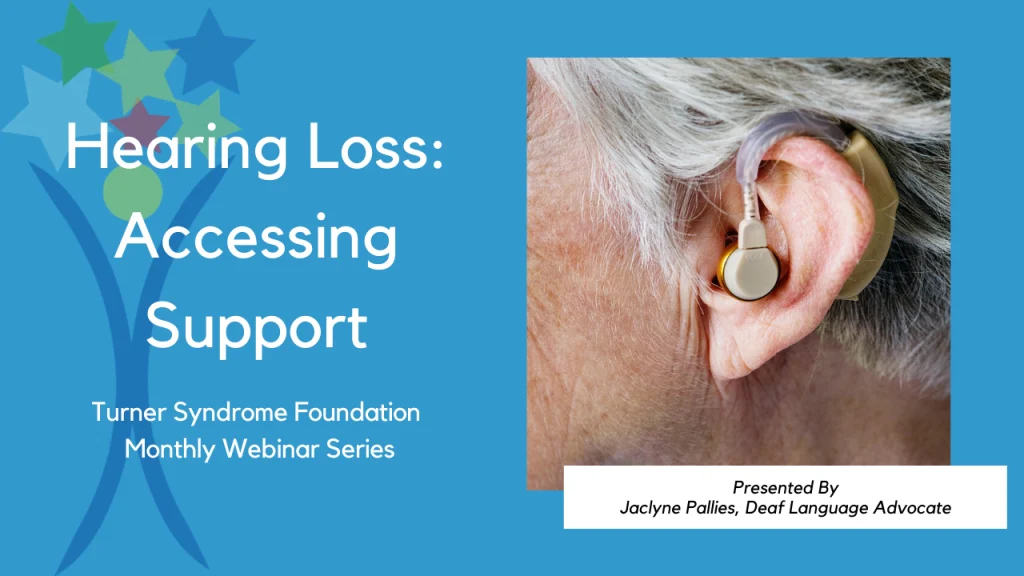
With the help of gracious donations, TSF is happy to provide a FREE webinar available right now about your rights under the Americans with Disabilities Act, how to learn about state-specific policies, resources to support you, and tips to navigate a variety of social situations.
Not to mention, the speaker is a renowned Deaf and Hard of Hearing Specialist. Access now by clicking the green link above or the image to the right!
(Note: Fill out the registration form to receive a link to the full webinar.)
For more information on hearing aid assistance and hearing difficulties in Turner syndrome, explore these articles:
References:
Alves, C., & Oliveira, C. S. (2014). Hearing loss among patients with Turner’s syndrome: Literature review. Brazilian Journal of Otorhinolaryngology, 80(3), 257–263. https://doi.org/10.1016/j.bjorl.2013.08.002
Bondy, C. A. (2007). Care of girls and women with Turner Syndrome: A guideline of the turner syndrome study group. The Journal of Clinical Endocrinology & Metabolism, 92(1), 10–25. https://doi.org/10.1210/jc.2006-1374
CART Services. (n.d.). CART – Communication Access Realtime Translation Services. https://www.captionfirst.com/cart-services-provider
Handzel, S. (2024, February 22). Cochlear Implants vs. Hearing: Difference?. NCOA Adviser. https://www.ncoa.org/adviser/hearing-aids/cochlear-implants
Kavoussi, S. K., Christman, G. M., & Smith, Y. R. (2006). Healthcare for Adolescents with Turner Syndrome. Journal of Pediatric and Adolescent Gynecology, 19(4), 257–265. https://doi.org/10.1016/j.jpag.2006.05.012
Mount Sinai Health System. (n.d.). Sensorineural Deafness. https://www.mountsinai.org/health-library/symptoms/sensorineural-deafness
U.S. Department of Health and Human Services. (2019, November 12). Assistive Devices for People with Hearing, Voice, Speech, or Language Disorders. National Institute of Deafness and Other Communication Disorders. https://www.nidcd.nih.gov/health/assistive-devices-people-hearing-voice-speech-or-language-disorders
Written by Victoria Brown, TSF volunteer blog writer. Edited and Designed by Riya Ajmera, TSF Blog Coordinator. Peer Reviewed by Mary Gwyn Roper, MD and Kayla Ganger, PA-C. Cover Graphic by Kesha Amin.
© Turner Syndrome Foundation, 2024
Subscribe to our Newsletter
