



Turner syndrome is a genetic condition only affecting females. Normally, females have two X chromosomes containing important genes for development, growth, and reproduction.
Turner syndrome happens because of a chromosomal problem that occurs randomly. In Turner syndrome, a female is missing an X chromosome or has an incomplete X chromosome, lacking complete genetic instructions. Understanding the role of chromosomes can help us understand how Turner syndrome can impact many aspects of a woman’s health, from growth to puberty and beyond.
Turner syndrome can be detected by a few procedures which include Karyotyping, FISH (Fluorescence in Situ Hybridization), and CMA (Chromosomal Microarray Analysis). In this article, we will explain karyotyping
What are Chromosomes?
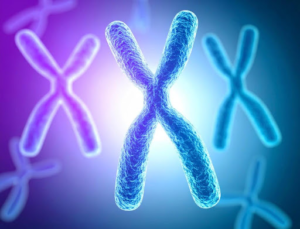
Chromosomes contain all the genes that carry DNA in living organisms. Most people have 46 chromosomes (23 pairs), including two sex chromosomes (XX for females, XY for males). Every chromosome contains two arms: p arm (short arm), q arm (long arm).
What Is Turner Syndrome, Genetically?
Turner syndrome is the most common sex chromosome abnormality in females. TS happens when one X chromosome is either fully or partially missing. The different types of patterns in TS include Monosomy X and Mosaicism.
- Monosomy X (45,X) is the most common and takes place when an X chromosome is missing, making every body cell contain just one X chromosome, usually because of an error that occurred in the formation of sperm or egg.
- Mosaicism (e.g. 45,X/46,XX) is when some body cells have two X chromosomes, while others only have one, which happens because of an error in cell division when the fetus is developing.
- TS may also result from structural abnormalities of the X chromosome. In some cases of TS, the X chromosome may form a ring. This happens when the two arm ends (p and q arms) of that X break and come together forming a ring chromosome. Similarly, deletion also occurs on one X chromosome, but it involves a missing short (p) arm.
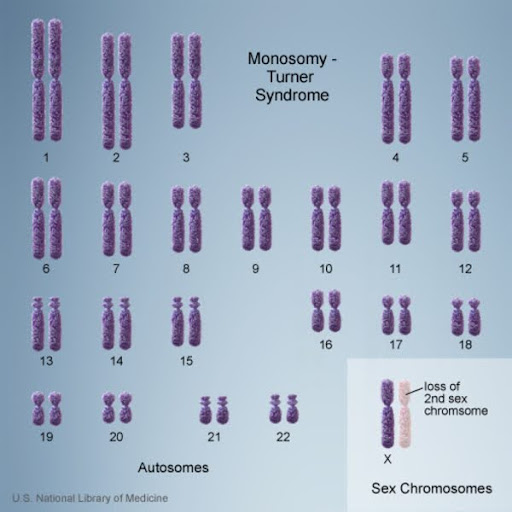
In Turner syndrome, missing genes on the X chromosome cause issues including short height, failure of ovaries development, and problems with other organs. Variations in TS can affect how symptoms show up and how early the condition is diagnosed.
Individuals diagnosed with monosomy X usually have very noticeable features which makes diagnosis simpler. However, people with mosaicism have fewer symptoms which may not make diagnosis as easy. Ring chromosomes and X chromosome deletions can cause all kinds of symptoms depending on the extent of genetic material that has been lost; therefore, further genetic analyses and tests may be needed for accurate diagnosis.
How Karyotypes Help Diagnose Turner Syndrome
A karyotype analysis provides doctors with an insight of a person’s chromosomes, helping to detect any genetic conditions if present. A karyotype shows the number of chromosomes a person has, including their structure which is observed under a light microscope.
For karyotyping, a blood sample is placed in a lithium heparin tube. More blood is needed from adults during a blood test, while less blood is taken from children. When getting an amniocentesis sample, about 12-20 mL of amniotic fluid is required in a leak-proof container.
In the lab, white blood cells (from blood sample) or fetal cells (from amniocentesis) are separated and grown in petri dishes. Cell division is stopped at metaphase (the phase where chromosomes are lined up and can be seen easily). Then, cells/chromosomes are stained and made into a karyotype.
A karyotype may be ordered before birth when a DNA screening or prenatal ultrasound presents signs of chromosomal abnormalities in a fetus, like issues with the heart, abnormal fluid or too much fluid at the back of the neck, and abnormal kidneys.
When a baby is born, some TS signs can involve low-set ears, slowed growth, short toes/fingers, swelling of the hands/feet, and a small jaw. During childhood, teenage years and beyond, the signs of TS are mostly associated with short growth and ovarian dysfunction, causing slow or no puberty occurrence and menstrual cycles ending early.
Why this Information Matters
Understanding the genetics behind TS can help physicians guide individuals with the genetic condition. No two people with TS are exactly the same… even their X chromosomes. Parents or adults with TS should feel encouraged to ask questions about their karyotype and what it means for their body and health.
Noticing and understanding the specific type of X variation can help support medical care, growth, and fertility while raising awareness about the condition. Every X chromosome carries a special story waiting to unfold.
Citations
- Mayo Clinic Staff (2022, Feb. 11). Turner syndrome. Mayo Clinic.
- Sharma, L. & Kikkeri, S. (2025, Nov. 10). Turner Syndrome. National Library of Medicine.
- Luo, H., Ni, L., Yang, YQ. (2022, March 31). Characterization of a rare mosaic X-ring chromosome in a patient with Turner syndrome. Springer Nature Link.
- Campen, J. (2025, Oct. 2). Karyotype. National Genomics Education Programme
- Dutra, A. (2025, Dec. 25). Karyotype. National Human Genome Institute.


Written by Ifra Raza , designed by Gerely Caba.
© Turner Syndrome Foundation, 2026
