



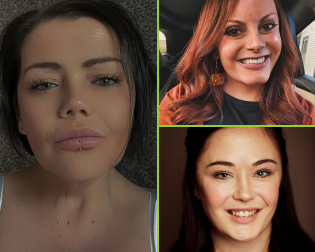
Underscoring our commitment to serve and inform Turner syndrome patients wherever they are located, these are three patient stories and experiences from different geographic locations.
These stories from Germany, the United Kingdom, and the United States represent that across the would, many experiences with TS are unique, while there are common threads that connect us all.
Germany: Viktoria’s Story
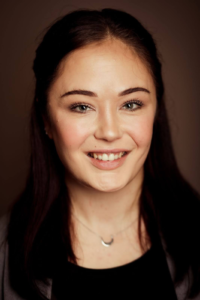
Where My Story Begins
I was diagnosed with Turner syndrome by my doctors when I was very young because my mother became worried about my size. I was considerably smaller than other girls of my age. Turner syndrome affected me in all the ways you can imagine – physically, mentally and emotionally and socially as well, because as a child I was always the only one in the classroom with this condition. I felt alone and I distanced myself from other students.
My first experience as a child with medical care for Turner syndrome was okay, but I felt awkward because I needed to see the doctor more often than other children. As a child, I had to receive daily growth hormone injections every single night. This required frequent doctor and specialist appointments throughout my childhood, which were difficult and often isolating.
Fertility Concerns
After I became a young woman and having children became important, I sought medical help once again. The endocrinologist I had seen for years told me there was nothing they could do for me, and the only option was adoption. With tears in my eyes, the only thing I thought to myself is “I’m going to prove you wrong”.
I felt once again completely alone. One day when I had a discussion with a work colleague and I opened up to her about my condition, she recommended me to a fertility center.
I went there and I felt so comfortable from that very first day. The doctor I spoke to said to not worry, and that they would help me. She took an ultrasound and a blood test and said we can try and collect as many egg cells as we can. It took at least five to six procedures called follicular aspiration. This a procedure where they put you on full anesthesia and put a device in your vagina to collect the egg cells.
So, my advice to others is always seek a second opinion and don’t give up – keep trying! If it doesn’t work one way, then try another way, but you will figure it out!
I am proud of myself for having the courage to open up to my work colleague about my fertility concerns, and thanks to her recommendation, egg retrieval was possible. I managed to save 3 egg cells and freeze them at the fertility center, and I will definitely go through more procedures. My personal goal is to try and collect at least 5 egg cells in total and freeze them until I am ready for IVF.
I must add that the entire fertility preservation process, including saving and freezing the eggs, came with a considerable financial burden. This challenge was amplified because in Germany, the public health insurance does not recognize the egg cell retrieval as a necessary procedure for TS patients and therefore does not cover the costs.
Continued Treatment – How I Manage
Now that I am grown, I face the ongoing requirement of Hormone Replacement Therapy (HRT). I take a daily pill (similar to what women normally use to avoid pregnancy) to supplement the lack of estrogen in my body. This is crucial to prevent long-term complications such as osteoporosis and arthritis. This is a daily challenge, but I overcome it simply by treating it as an essential, non-negotiable part of my health routine, just like brushing my teeth.
In summary, TS management has always been a continuous, long-term process. Ultimately, overcoming the challenges has been about managing the daily requirements of TS and advocating for myself.
United Kingdom: Tracey’s Story
My Diagnosis
I was 6 years old when diagnosed with Turner syndrome. The school nurse was concerned about my height as I was a lot smaller than the other girls. I was then referred to the height specialists at the Queens Medical Centre in Nottingham and after tests including blood tests, scans and X-rays, it confirmed the diagnosis of Turner syndrome.
A scan indicated my ovaries were so small that they were nearly nonexistent, which meant that I had to have them removed when I was 11 years old – a very young age, and I started to feel a lot different to all the other girls. Being on medication from the age of 11 was really hard, especially because I didn’t fully understand TS yet.
Experiences in School
It was so hard being small, and the awful comments that were made by others made my life really hard. But my Dad always told me to stand up for myself and I also had an older brother me who was very protective of me.
School was also hard because I struggled with learning and understanding. To this day, I have a hard time reading and remembering policies and procedures. No one understands my frustration or believes me, and I feel like they just think that I’m stupid, which really hurts.
TS in Adulthood
Now at the age of 48, my mental health is bad and I struggle in daily life. I find it so hard sometimes to explain to people what I have been through. Now I have been diagnosed with osteoporosis in my spine and hips and means now I have to have infusions. Also TS caused me to lose 70% of my hearing and my eyesight is very bad. I could go on forever with other health issues that TS has caused. My main challenge is with my height being 4’9”. Even at the age of 48, people are always commenting on my height.
However, people who I meet and explain my story to are always so supportive and understanding. It’s so nice to go to a clinic that understands TS at the hospital, but I find myself having to explain TS to doctors outside of the hospital.
My advice for others is to make sure you understand TS so that explaining it to health professionals becomes easier, and trust me, that’s a lot. Surviving life and dealing with day to day challenges is hard. I’m an older TS person now, just getting through the struggles of life, but I’m hoping to help build awareness about TS.
United States: Katrina’s story
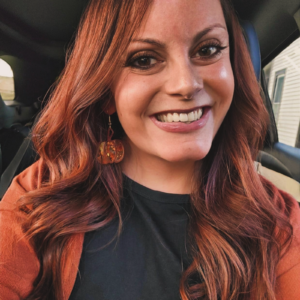
Surgery in Childhood
I was diagnosed with Turner syndrome at a very early age, and this led to health complications. I had corrective surgery when I was one and spent most of my first two years at a children’s hospital.
I had a tumor on my head that was removed and had plastic surgery to make the scar smaller. To this day I cover it with my hair and am still self- conscious about it. I also experienced constant urinary tract infections that were subsequently found out to be caused by kidney reflux, and I had corrective surgery for this in my early teens.
When I was young, my hands and feet were always swollen. I had four wisdom teeth removed in my teens because I needed braces.
I have a curvature in my spine, but am told it’s not severe enough for surgery. I have anxiety that affects daily life. I constantly worry about being different and always wanted to be like anyone else.
But I have the best, loving mom who never let me feel that just because I had Turner syndrome, I couldn’t accomplish my hopes and dreams. She dedicated herself to make sure I had the best healthcare, therapy, and support system.
Accessing Care
My tumor-related medical care was pretty much complete when I was younger, and this was fully covered. Now as an adult, insurance coverage is challenging. It is frustrating because my tumors won’t go away, but I have found excellent care with the help of my mother and from researching on my own.
I am proud of the fact l progressed as far as I have. I can drive. I have been a nurse for almost 14 years. I have a loving husband who understands my struggles and two of the best stepchildren that I get to help raise and love as my own!
My plans are to go for my RN and give others the best healthcare, just as I received growing up and am currently receiving. I also intend to continue to spread awareness of Turner syndrome!
For all TS patients and families, our programs focused on raising awareness, providing educational resources, updates for health professionals, advancing research efforts and more. So whether newly diagnosed or as a longer-term TS patient, visit us often for news and updates, support, and to connect with other TS patients!
Would you like to share your story? Fill out the form below.
Written by Robert Burleson, and designed by Gerely Caba.
© Turner Syndrome Foundation, 2025